Steve`s Country
For a smile as wide as a country sunrise
Coffee At Steve’s Country #73.
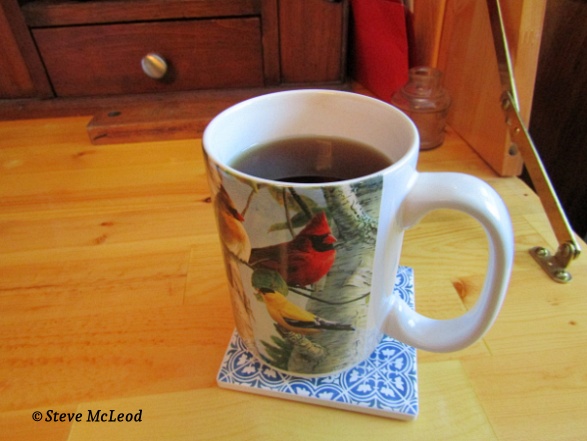
Good morning to all of you! Coffee is ready, just help yourself, sit back and relax! Well, it didn’t get anywhere near as cold last night as the forecast had said. It stayed at a nice 21F (-6C), so I didn’t freeze going out to feed the birds this morning, which is nice. The sky is nice and blue, the sun is beginning to touch the tops of the trees and the birds are starting to come in for their breakfast. Two nuthatches were the first to show up and each got a piece of peanut, a fairly large piece, then 1 flew to the apple tree, the other went up to the birch tree. The sun has sort of an orange color to it this morning so all the branches of the trees are taking on that orange glow.
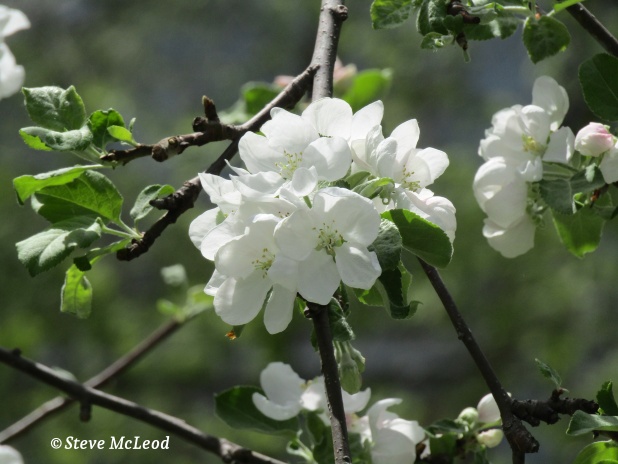
That east wind has begun now too I see. It’s supposed to be cooler today, but the rest of the week should be nice. I see the male hairy woodpecker has shown up now, but I still don’t see any redpolls. And here comes Jasper. He got here before the blue jays today so he gets first pick of the peanuts. He has been coming earlier these days, there he goes now with a nice big peanut. I guess he didn’t like getting the leftovers before. Seeing the snow melting so early really makes me start thinking about summer and all the beauty that goes with it. Although there is beauty in winter as well, there is also a lot of barrenness. Soon the trees will be full of leaves again, plus they will be full of birds singing their beautiful songs.
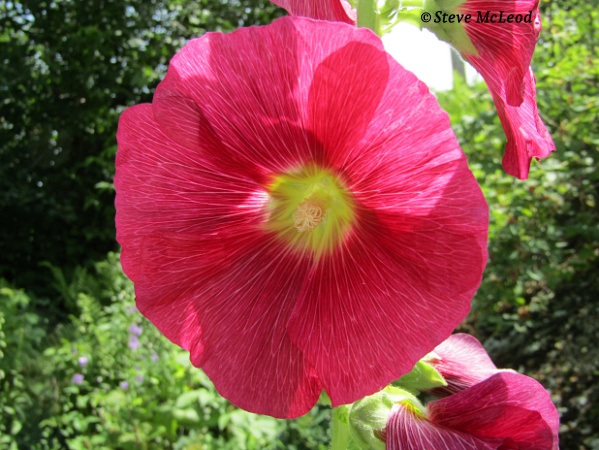
The chickadees were singing again this morning too, the only bird we have that really does sing this time of the year. I see the blue jays have arrived now, they seem to be a bit late today. The downy woodpecker is here now as well. I’m hoping that magpie will show up again, I have my camera ready just in case. He’s not very regular in coming around though and that makes it hard. But one of these days. Muffin is running around again, and up to the window she goes. There’s lots of bird activity now. Spring is coming early this year so we need some nice bright flowers to look at this morning. I hope you all have a wonderful day and God bless!
Steve and Muffin.
©2021 Steve McLeod.
Coffee At Steve’s Country #72.
Good morning and Happy Saturday everyone! The coffee is ready and it’s a beautiful day with all that sunshine and blue sky and…well, there was sunshine and blue sky before the sun rose. Now it seems to be mostly cloudy. But it is supposed to be sunny and warm today, 46F (8C) for a high today. Then it kind of cools off again tomorrow. There we go, the sun is sort of shining again, very nice indeed. Right Muffin?

Hey, you don’t look very happy today. (you not tuck me in, so can’t go sleep) Well, I did try, but look at my hand. (wow, 10 bandaids, almost new record) Um, yes, well, that’s why we stopped the tuck in. (you gave me big shock, that not nice) You were lying on a wool blanket, it happens sometimes. (sure, blame blanket, but it me that sad) You scratched my hand, blood was dropping everywhere. (Muffin looks…yep, that was a good one) See? Now you’ve got a big smile. (um, rats, caught me) Come up here and curl up with me. (okay…with big smile, move over) You already have half the chair. (I like to stretch when I sleep) Here, how’s that? (better…snore) That was certainly fast. I was outside early this morning putting food out and I could hear Theodore calling, but I just couldn’t make out what direction it was coming from. I turn around and there he comes walking up the steps talking away.

Hi Theodore. Gerbil, gerbil. I see you survived the winter okay. Gerbil, gerbil. Yes, there was some cold weather, but most of the winter was nice this year. Gerbil, gerbil. That’s true, I do have a warm place to live and you’re outside all the time. But turkey’s are used to that. Gerbil, gerbil. Oh, no one warned you about how cold it would get or you would have moved south? It’s not easy to migrate, especially for wild turkeys. Gerbil, gerbil. You haven’t found a mate yet? I’m sure you will. Gerbil, gerbil. The only other turkey is another male? Hmm, that could be tough, you might have to travel around a bit to find a mate. He looks at me with silence. Gerbil, gerbil. Yes, that’s true, time for breakfast. Up he goes to the feeder and I come back inside. Busy morning. Quite a few redpolls around this morning too, seems to be getting more each day. Well, I hope you all have a wonderful Saturday and God bless!
Steve and Muffin.
©2021 Steve McLeod.

