Steve`s Country
For a smile as wide as a country sunrise
Coffee With Steve #6.
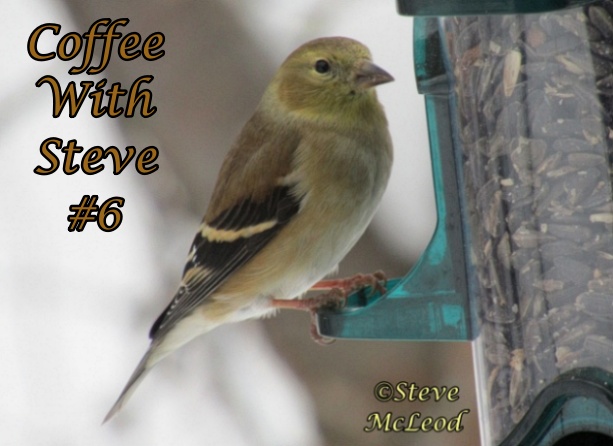
Hello everyone and welcome back to another coffee time with Muffin and I! I don’t put Muffin’s name in the title since she doesn’t really like coffee, but she does like all the visitors that come here to enjoy a nice hot cup of coffee. I hope today finds you all well. I am looking forward to meeting with all of you again. The coffee pot is on, there is freshly baked cookies available and I know some of you will also bring some goodies for us to enjoy. It’s a bit cool and windy outside but inside it’s warm and cozy. Hi Tiffany, nice to see you today. Hi Nina, good to see you again. And here’s Hilary, how are you today? And Sally too, nice to see you.
Here comes Simon, haven’t seen you for a while at our coffee time, good to see you again. Hi Manuel, it is very nice to have you join us today. Hi Dee, and Suni too, nice to see you both today. Let’s get that coffee going for everyone. Hi Sheree, come in and grab a chair while I get your coffee. Hi Renee, I’ll get your coffee right away. Well, it looks like Muffin has picked Hilary today, hope you don’t mind. She will probably move around a bit and say “hi” to everyone. Hi Eugenia, a fresh pot of coffee is ready, we never run out of coffee around here, that’s for sure.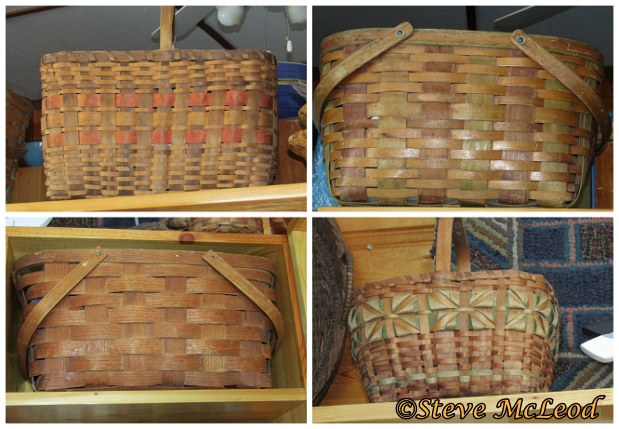
Thought I would show my small collection of baskets and a couple other things today. The top right and bottom left are both picnic baskets from the 1940s. The top left could be used as that also, but just more of a general carry basket, from either the 1930s or 40s. the bottom right is just a smaller carry basket from the 1940s also.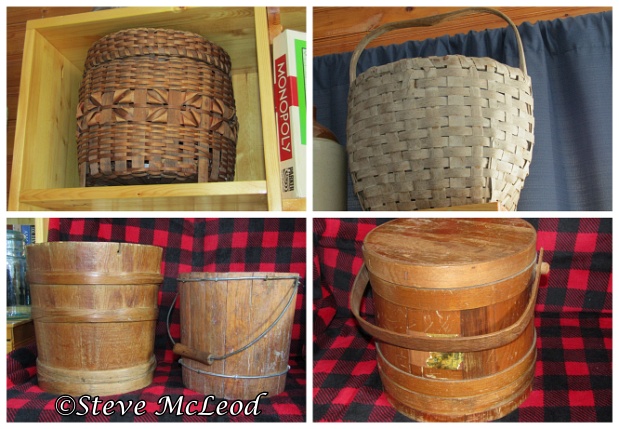
The top left basket is a storage basket with a nice lid, from the 1920s or 30s. The top right is a gathering basket likely from the 1920s or perhaps a little older. The bottom wood buckets are not too old either, the one on the right I’m not really too sure, possibly 1940s. On the left the smaller one is from the 1920s and I’m not sure at all about the other one, possibly the same age.
Does anyone need coffee refills yet? Or tea, I have several different teas available. I see Simon is waving, must want more tea. Oh, look, Muffin is helping to keep your feet warm. Oh, I see, her claws are stuck in your foot, there, that should be better. Now I see she’s curled up on Suni’s lap. Hi Lydia, hi Sharon, nice to have you both join us. No, you’re not too late, never too late around here for coffee.
And here we have my oldest basket. This one was a shopping basket used at stores, just like the plastic ones we have today. It is a very solid and quite heavy basket which makes sense. Mainly it would have been used for fruits or veggies and then was set on a scale to weigh it, providing it was all the same type.
It is so nice that in our modern age we can meet together like this from all over the world. And don’t worry if I didn’t mention your name, everyone is welcome to stop in for coffee for these coffee times. Hopefully, once the weather is nice again, we can start to have our coffee chats outside. It does get a little full in here at times, but Muffin and I don’t mind at all. Thank you all for coming today, it has been a fantastic time once again! I do hope you all have a wonderful day and God bless!
Steve and Muffin.
© 2020 Steve McLeod.
Nature’s Art, #33.
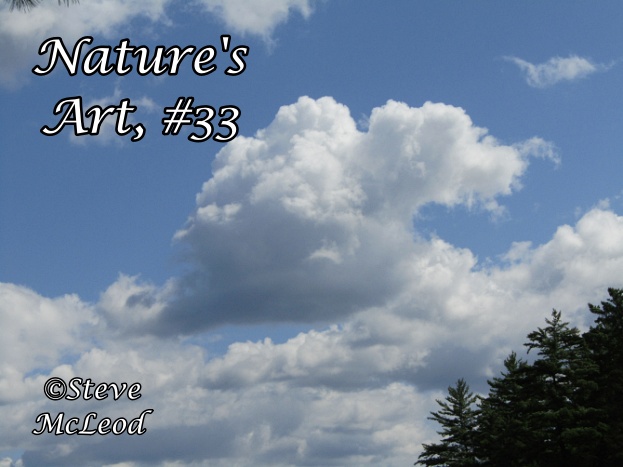
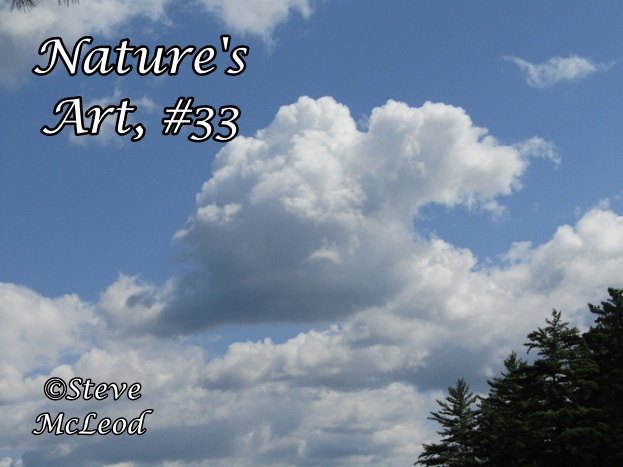
Hi everyone on this slightly snowy day here at Steve’s Country! The sun is trying hard to break through the clouds however and I can now see larger patches of blue sky in the west. So nice to see that sunshine isn’t it? Remember that no matter how thick and heavy those clouds are, the sun remains shining and will soon break through bringing with it warmth and beauty back into our lives. But even when we think times are tough and it seems those clouds just don’t want to go away, we can still find so much beauty around us. We just need to look for it. And usually we will find that we really don’t have to look very far either. Sometimes it’s right in our own backyard. Or along the sidewalk as we go out for a little walk during the day, or even at night.
So let’s look at some of that beauty right now with these pics…
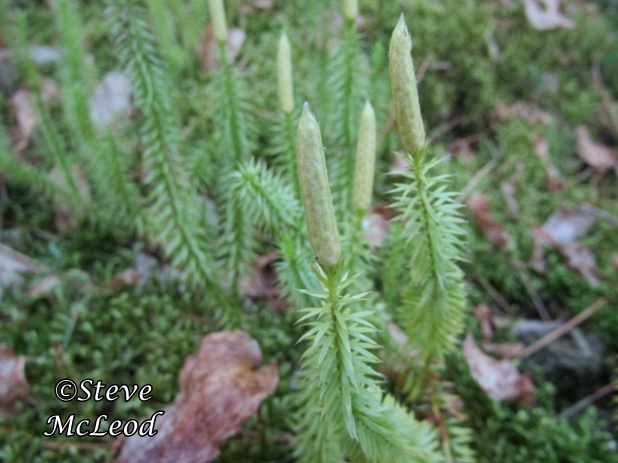
Here we have an odd looking little plant growing up from the moss. I believe it is part of the moss actually, sort of it’s “flower”.
The beautiful dark blue berries of the “clintonia” flower. Nice to look at, not so nice to eat however. Best to not eat these berries as they can cause serious stomach problems.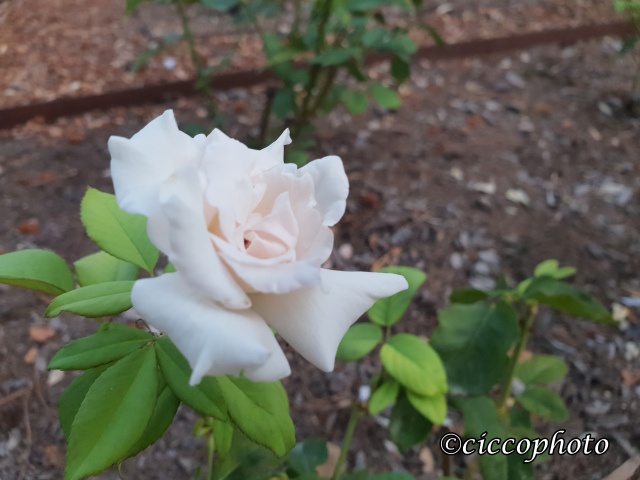
And then there is the beauty of a rose, or any other flower for that matter.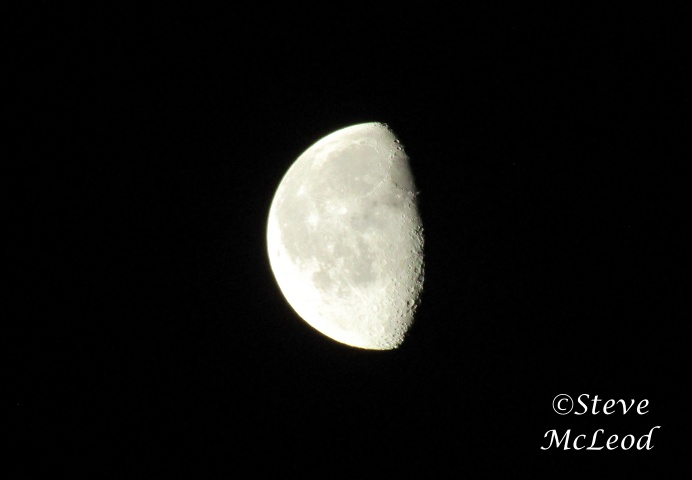
And if you enjoy night walks, we have the beauty of the moon, complete with craters. There is beauty all around in one form or another, we just need to look for it. I hope you have enjoyed these pics today, a few more than usual. I also hope that you all have a wonderful day and God bless!
Steve and Muffin.
© 2020 Steve McLeod.

