Steve`s Country
For a smile as wide as a country sunrise
Oddities and Beauty in Nature. #3
Hi everyone! I’m back again with another oddity in nature for you to enjoy. This is one that I think is really cool and I call it a wooden rose. It is actually a seed cone that grows on alder bushes in our area.
When that little cone opens up, it kind of spirals itself open and ends up looking like a rose, sort of anyway. Maybe I just have an over active imagination, but I think it looks like a rose anyway, and it is hard like a piece of wood. Or, hard like a pine cone.
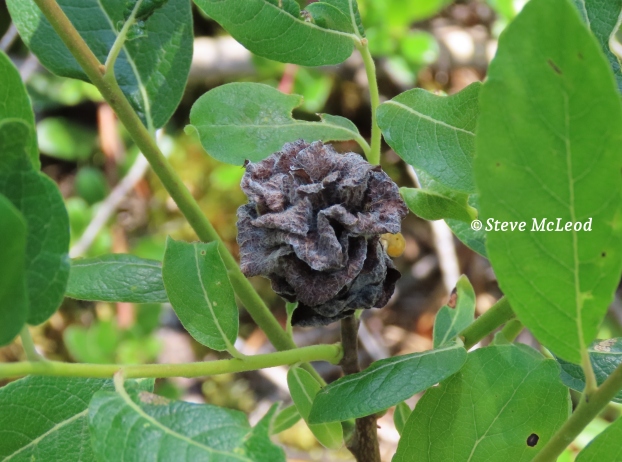
They can actually last for years, sitting on one of those alder bushes. I hope you enjoy this look at an oddity in nature that I think is quite beautiful. Have a great day everyone and God bless!
Steve and Muffin. ©2025 Steve McLeod.
Incredible Insects! #11 Beautiful Damselfly.

Good afternoon everyone! It’s been a while since we had one of our incredible insects posts and so far they have been about butterflies. And we have many more butterflies to look at yet as well. But today we take a break from the butterflies to look at some beautiful damselflies.
These kind of look like miniature dragonflies, but they generally keep their wings folded in together by their bodies, while dragonflies generally keep their wings spread open. Today we will look at one of our most abundant damselflies, the Eastern Forktail Damselfly. On our last highway trip I was able to photograph the male, female and the immature female.
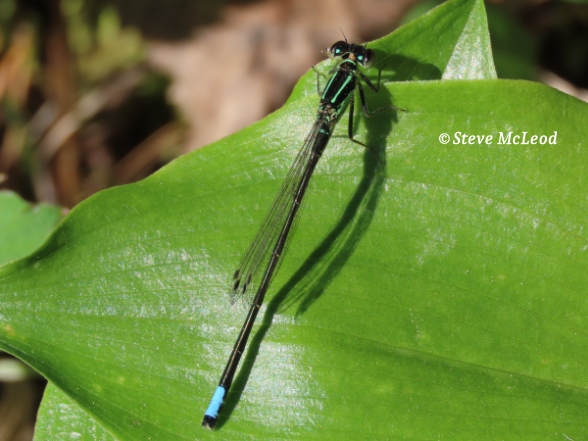
Eastern Forktail Damselfly, adult male.
I had not yet seen an immature female even with all the thousands of damselflies I have seen over the years. But they change color just in one day from Immature to mature. So, if you are not in the right spot at the right time, then you miss the immature. I couldn’t believe my eyes when I saw a bright orange damselfly! That’s the immature female.
The immature male doesn’t have quite the same major change in color. These damselflies are only 1.2 inches (30mm) long, most of that being the long, thin tail section. They can disappear quite quickly into thicker vegetation while trying to photograph them. Some species are “more friendly” than others (I like to say it that way), so they are easier to photograph.
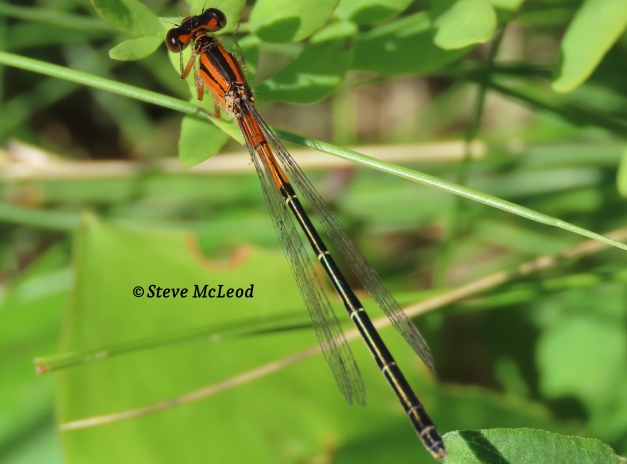
Eastern Forktail Damselfly, immature female.
The orange one didn’t want to sit still, but I was persistent and managed to get photos of her. They will start to come out in late May and continue into early October. However, I have found that in our specific area they tend to come out around mid June and continue into early September.
They eat small insects and I have seen them catch mosquitoes and small flies. Damselflies are one of my favorite insects and I will be showing some more species as we go along. Unfortunately I have not seen any around our building or the neighborhood.
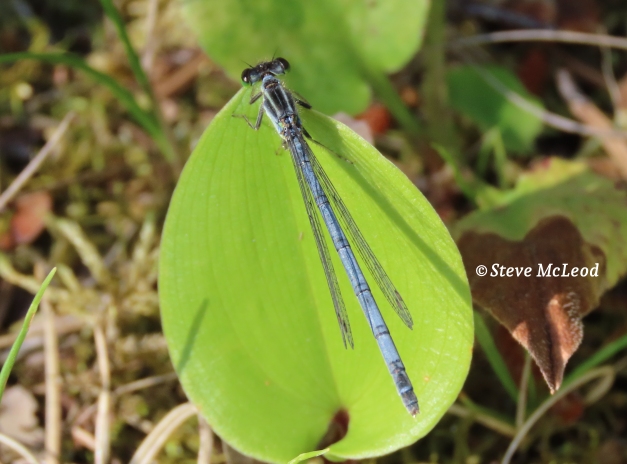
Eastern Forktail Damselfly, adult female.
This species likes to be close to calm water like ponds and quiet bays on lakes, also marshes and slow moving streams. I hope you enjoy the photos! Have a great day everyone and God bless!
Steve and Muffin. ©2025 Steve McLeod.

