Steve`s Country
For a smile as wide as a country sunrise
Steve And Muffin’s Funny Monday. #1
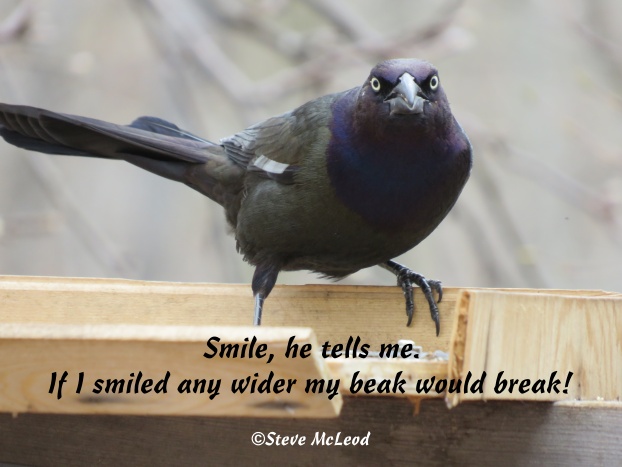
Hi everyone! Well, here we are back again with some more chuckles for you to enjoy! Please feel free to smile, giggle or laugh. And here we go…
Artist- “Now, here is a picture, one of my best too, I have just finished. When I started out I had no idea what it was going to be.”
Visitor- “After you were finished, how did you find out what it was?”
==================
Artist- “That, sir, is a cow grazing.”
Visitor- “Where is the grass?”
Artist- “The cow has eaten it.”
Visitor- “But where is the cow?”
Artist- “You don’t suppose she would be foolish enough to stay there after she had eaten the grass, do you?”
==============
Just a short couple of humorous bits of humor today. Enjoy your smiles and God bless!
Steve and Muffin.
©2022 Steve McLeod.
Musings For Monday. #2
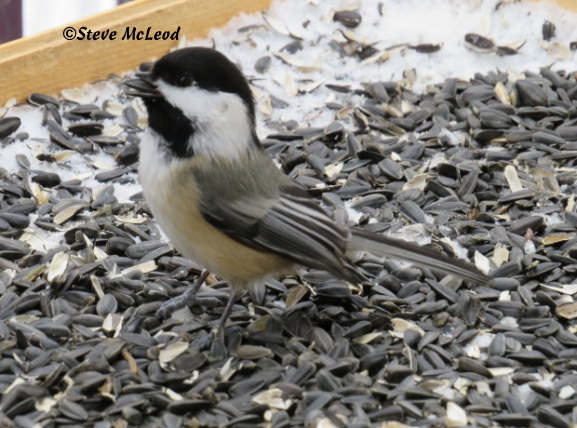
Good morning everyone on this cold and frosty Monday! I’m hoping this will be our last very cold day for a while. I will admit that I am ready for a longer break from this cold weather. I’m sure the birds would be in agreement with me on that one. It was cold yesterday too, with a strong wind, which made it feel even worse. The birds were all puffed out but the wind kept blowing their feathers out of place. I kept putting out chopped up peanuts for the smaller birds and they certainly took them quickly. Much less work, which saves on energy, which helps keep them warmer.
But mostly the birds are eating sunflower seeds which gives the birds the warmth and energy they need. And they are certainly eating a lot of seeds these days. The colder the weather, the more food is needed. It is nice to know I am helping out a few of our winter birds. While outside I noticed a red-breasted nuthatch on the suet, so I went over to him and put my face right up close. He came right over to me looking at me while I looked at him. Then he “beeped” twice and went back to eating. We were about 2 inches away from each other. It was so cute to see that.
I need to make some more suet “cakes” for them today. Shopping day today, I wonder if anything will happen. Things so often happen to me at the stores that I just expect it now. Makes things interesting anyway. And it gives me something extra to write about. Like when I wanted to buy some sugar. I picked up the package and the bottom fell open and all the sugar went onto the floor. I just stood there and looked. Then took another package and left. Quickly. I did find an employee and told the person about the mess in that aisle. She was not too happy about the news. But she called someone else to come and clean it up. Maybe she just wasn’t happy that I told her.

Oh well, I am finally back home, actually I was back 3 hours ago, but after resting my back for an hour, then it took 2 hours to get my computer back up and running again. But it is working good now which is nice, but it means I am behind in my posting again. So I guess this should be a “good afternoon” post instead! It is a very cold day out there, and windy now too. But the wind is bringing milder air with it, so tomorrow should be much nicer, perhaps as warm as 16F (-9C)! Well, I hope you all have a very nice day and God bless!
Steve and Muffin. (the top featured image is a happy looking little black-capped chickadee)
©2022 Steve McLeod.

